1500 word article – Education beat, May 2021

‘Waste of Time:’ Teachers question wisdom of state testing during a pandemic

As students in New Orleans are getting ready to take yearly state testing, teachers paint a picture of a chaotic year capped with confusion over why testing is going on. Many Orleans Parish schools re-opened in the Fall 2020 semester, only to close due to an uptick in cases. This semester, as case numbers are going down, many schools are embracing a hybrid education. A return to the classroom brings along a return to standardized testing – which has some educators puzzled.

            Testing aside, teachers are juggling more than just education. Tessa Rose is a 5th grade teacher on the West bank. She describes her duties outside of teaching as “wiping everything down all the time, constantly cleaning everything.” Also, enforcing a mask mandate that feels absurd at times – “I’m telling them 30 times a day to pull their mask up because as they take it down and drink some water, and they don’t pull it back up where they claim they can’t breathe, and they pull it down and pull it back up. Or they just feel like taking it off and don’t want to wear it kind of thing… It feels kind of silly and pointless because we’re eating breakfast and lunch in the classroom anyway.”

            Another issue she mentions is a disparity in quality of education between online students and in-person students. 2/3rds of her students are in person, but she’s still worried about the third that are online: “I have students doing virtual school who haven’t turned in a single assignment since December. They show up every day online. They don’t do a single piece of work, they don’t turn in a single assignment, they don’t ask a single question, they have no idea what’s going on.”

Brandon Lamartiniere teaches 10th graders World History at Booker T. Washington High School. “I’ve got, on any given day, 5 to 13 in front of me in the classroom. I have another 15 who are zooming in. The biggest difficulty is how do I give the virtual kids the same care and quality of education that they absolutely deserve while still being present for my kids who are in front of me?”

He shares a similar sentiment to Tessa – “as educators, we recognize there are definite gaps. I don’t think that necessarily mitigates the work that teachers have done this year. We have all tried incredibly hard. One of the things that many teachers would probably tell you is we’ve worked harder this year to close some of those gaps, then we’ve ever had to before. But with the way that the scheduling has been like, I’ve seen my kids less this year than any year previously.”

            Juggling enforcement of mask mandates and the fact that students are finally seeing the inside of a classroom for the first time in nearly a year has local teachers questioning the state’s decision to give testing – Lamartiniere says “I’ve had to make strategic cuts from curriculum because we just don’t have the sheer amount of time, right? To give an assessment that is expecting kids to have covered the full breadth of the curriculum is absurd… To continue business as usual when things have not been usual is, in my mind, notoriously tone-deaf.”

            On March 17th, 2020, Governor John Bel Edwards granted waivers for schools to forgo LEAP testing because of the pandemic. In a statement released by the LA Department of Education, Dr. Cade Brumley, State Superintendent of Education, writes “we cannot afford to go another year without understanding where students are academically … The data from the LEAP 2025 assessments will not only help us examine the ‘COVID effect’ on student learning, it will help us better understand how me might allocate resources to ensure we are serving all students.”

It is unclear how the state will use this year’s test results. Traditionally, LEAP scores are used to give schools a letter grade which translates into funding for the school. It is also used to gauge elementary and middle school student’s readiness for the next grade – in rare cases, poor performance on the test can lead to being held back. The BESE has the option of filing a petition to waive letter grades given to schools this year but will not decide until June 15th.

Rose says she and her fellow teachers have the same perspective when it comes to testing – “we all feel like, why are they taking this test? Why are we wasting our time on this test? Our principal has to put on a face and say, ‘testing is important, we have this opportunity to see where we’re at. Students are going to have to test for the rest of their lives and it’s good for them to practice testing.’ But nobody, nobody wants the students take the Test. It’s a waste time for the students. The parents feel like it’s wasted as well.”

She believes the time and resources put towards state testing could be more wisely used to catch students up – “It’s an entire week of just testing, which, again, with all the learning loss that has occurred and time that we’ve lost, it’s just so crazy to focus so much time on testing, rather than teaching. We know they’re behind, we’re going to test them and we’re going to realize they’re behind. And that’s not going to help anyone because we already know that.”

Brandon estimates the time lost educating due to testing is more than the week-long test: “if you think about it from the perspective of how much time are we losing because we’re in review mode? Well, then that’s a very, very different conversation.”  Lamartinierre is referring to “teaching to the test,” the practice of using the weeks before the test to prepare students for standardized testing.

He also questions the judgment of forcing students to take the test in-person – Louisiana is not allowing online testing due to security concerns: “you’re telling those kids you will test in-person in a building that you haven’t been to in over a year, or maybe, ever right? Maybe our new students to our school? That’s something.”

“The fact that there’s been such huge disparities in students that have been in-person and students that have been online and tech problems – that’s not going to be taken into account when they have to take this test,” Rose says.

State testing is an issue larger than COVID-19. It has been a source of controversy nationwide since the No Child Left Behind Act was passed in 2001. With the education reform bill’s passing, mandated standardized testing became a way to hold schools accountable for poor student scores. But, some argue that the test benefits upper-middle class students and teachers say they can’t do anything with the results themselves.

“The idea behind testing is that, in theory, it is an objective measure of student progress. As soon as the word objective is used, that should probably be a flag. Because what is objectivity? And, how can we make that authentic for, so many students coming across different strata?”

Lamartiniere is not alone in this thinking. Giving a one-size fits all standardized test to millions of students who vary greatly in life experience has many experts worried. Studies have correlated socioeconomic status with higher test scores, leading teachers to raise questions of is the test really an objective, impartial assessment if wealthier students consistently score better?

Another argument against testing is that teachers aren’t given enough information from the students test to help them.

Rose says, “they don’t give us the results – they tell us which students scored satisfactory, approaching basic, basic, mastery, and advanced. But they don’t tell us ‘hey these are the things your students are struggling with’ which makes the testing even more absurd. Because why assess our students and find out where they’re lacking if you’re not going to tell us where they’re lacking?”

Expect more information on what the state plans to do with test scores by June 2021. The Louisiana Board of Elementary and Secondary Education (BESE) will be meeting to discuss this among other topics.
2 700-word articles – April 2021

Another Roaring 20s?

            Crimson Pictures, a local production company announced in early April a “boom” in movie production work that has resulted in “most of the crews [being] booked until fall.”

On April 2nd, the CDC announced that “people who are fully vaccinated with an FDA-authorized vaccine can travel safely within the United States.” April 4th saw the highest daily airline passenger count since the pandemic began.

Property developers in Lafayette, LA bought an old cannery for $1 million in April. In an interview with the Advocate, the developer, Marcel Wisza, explained “there is so much pent-up demand …. We’re talking three years from now, and we believe we’ll be well on our way back to normalcy at that time. Certain things that people have been unable to do, they will do in excess.”

Similarities Between Then and Now

A few years after the Spanish Flu of 1918 came a period known as the “Roaring 20s.” Also known as the “Jazz Age,” it was a period in American History characterized in part by economic prosperity, changing social norms, exciting new technologies, and glitzy parties.

The similarities between the COVID-19 pandemic today and the Spanish Flu of 1918 have people wondering – are we headed for a new “roaring 20s?” A Google search of “roaring 20s coronavirus” brings up a slew of articles – “2020s will try to Roar like 1920s after Covid;” “Epidemiologist looks to the past to predict second post-pandemic ‘roaring 20s’;” “Forecast predicts another Roaring 20s.” After being cooped up for a year, a vaccine finally becoming available – people can’t be blamed for imagining life will be like the 1920s – parties, fun (finally), music festivals. Especially New Orleans, a city usually bustling with public celebration – Mardi Gras, Crawfish boils, Jazz fest, Decadence, Essence fest, the Red Dress run – all lost to a year of quarantine.

What the Experts Say

Sociologists and psychologists are in general agreement that there will be a boom in people seeking out social situations. Dr. Nicholas Christakis, a Yale University Medical sociologist says, following a pandemic,  “what typically happens is people get less religious. They will relentlessly seek out social interactions in nightclubs and restaurants and sporting events and political rallies… There’ll be some sexual licentiousness. People will start spending their money after having saved it. There’ll be joie de vivre and a kind of risk-taking, a kind of efflorescence of the arts, I think.”

John M. Barry, a professor at the Tulane School of Public Health, says “I think we will probably get into a Roaring ‘20s type of situation, but it will have a very, very different mood. The Roaring Twenties, I think was a reaction, partly to the Spanish influenza, but also to the First World War. People were tired of dying, they wanted to live instead. So I think we’re going to see a lot of tourism and that kind of thing. People are going to want to get out of the house — something they haven’t been able to do for a while now.”

Interview with Terrance Osborne – “Joie de Vivre!”

New Orleans artist Terrance Osborne made national news for his “Front Line” painting honoring nurses and medical staff in April 2020. Now, he is about to release his newest item – wearable art in the form of a pin saying “vaccinated.”

In a phone interview, Osborne gave his impression that the city is returning to life –

“it’s almost like, maybe that’s not the best analogy, it’s almost like everyone is getting dressed to go to a party. We’re at the point where we know that this thing is gunna go away. All the evidence points to it and so everyone’s ready, so there’s this energy in the air about it.”

 “I’m noticing people are beginning to hug and shake hands. A month ago, it didn’t happen” said Osborne.

As for the “joie de vivre,” (joy of living) predicted by Dr. Christakis post-pandemic, Osborne agreed with the idea: “the equivalent would be laissez le bon temp rouler … that would be an idea for where it’s headed. In New Orleans, it is a part of our culture to be physically intimate. We hug, we touch, it’s one of our things. Physically affectionate and verbally affectionate is probably the better way to say it.”

Asked what he is looking forward to the most post-pandemic, Osborne says, “I really am just looking forward to just hugging people. That to me, it may seem like a small thing, but when you don’t have it it’s a huge thing.”

“A Century since 1918 – we react the same exact way;” New Orleans’s handling of Spanish Flu and Coronavirus

In order to find out a little more about the parallels between the COVID-19 Pandemic and the Spanish Flu in 1918 in New Orleans, I talked with Dr. Sarah Hanney. Hanney is a native New Orleanian who wrote her masters theses on the Spanish Flu of 1918 in New Orleans. She earned her Doctorate at the University College London (where she now lives) researching the history of medicine. On the arrival on the COVID-19 Pandemic, she says, “I hate to say I knew what was going to happen. But, from spending 11 years of my life looking at epidemics, I kind of knew what was going to happen – viruses tend to have a similar pattern.”

During the COVID-19 Pandemic, according to Dr. Joseph Kanter, the top medical official of the Louisiana Department of Health: “for two weeks in the middle of March (2020), New Orleans had the fastest rate of growth for COVID of anywhere in the world to date. Faster than Wuhan, China, faster than South Korea, faster than Italy, which were all blowing up at that point in time.”

During the Spanish Flu in New Orleans, the City Board of Health closed churches, schools, banned public gatherings (including funerals), and businesses were forced to shut down. The 3,362 flu deaths from 1918-1919 were nearly 2x the national average.

Although now in London, Hanney kept up with New Orleans’s handling of COVID because her mother and sister are residents. She said she was shocked at some of the public defiance of mask orders when the pandemic first hit: “I don’t know if it’s New Orleans’s cultural attitude towards death and disease, but there was definitely a difference between it and other cities. Growing up in Nola we’re surrounded with these images of death and reminders of death.”

Arrival of the Spanish Flu, Economic Impact of a shutdown

The city of New Orleans had its first official death of the influenza on September 29th.

On October 1st, 1918, the Times Picayune published a statement from the President of the New Orleans City Board of Health, Dr. W. H. Robin; he wrote ” influenza does not spread or become severe in warm sunny weather.” Hanney believes Dr. Robin, although not actually certain that this was the case, made the statement to quell New Orleanian’s anxiety.

What followed over the next few weeks were officials downplaying the severity in NOLA. Cities across the US (such as New York and D.C.) began a quarantine procedure that closed down schools and churches to curb the spread.   In a City Hall meeting the next week – Dr. Robin said “what the board should specifically avoid ..was laying itself liable to ridicule because of unnecessary restrictions.” Hanney explains: “Just as we have criticism today with our modern pandemic, to what extent do we shut down a city without causing irreparable social and economic damage?  Whenever we look at past epidemics – whether it’s today, the 1960s, 1918, or even the 1700s – it’s completely impossible to successfully contain the spread of a disease to the point where you’re going to save the population without sacrificing the social measures that help a society to function and the economic health of a city or society. You kind of have to choose one or the other.”

Headline in the Times Picayune, one week after Dr. Robin rejected calls to quarantine the city.

Public Response

            Hanney says: “even though it’s been a century since 1918 – we react the same exact way. There’s a skepticism. ‘Is it going to affect me, is it just going to affect people in China?’ It’s not until things get serious that people realize ‘I need to take action.’”           She also mentions the public response was similar – including hoarding of certain supplies at the beginning of both pandemics. At the beginning of the coronavirus pandemic, toilet paper shortages were occurring across the US. Something similar happened in New Orleans during the Spanish Flu.
In 1918, doctors recommended people drink milk to provide natural nourishment for the body in a sort of protection from getting sick. It was thought to lower body temperature, so while not exactly a cure, doctors did publish public recommendations in the Times-Picayune. People latched onto this in New Orleans, and the milk supply was depleted from October-November of 1918. The local government stepped in to regulate prices – some stores were jacking up the milk prices. In mid-October, “emergency milk depots” were opened throughout the city to provide enough milk for citizens.
When asked what she misses most – Dr. Hanney says the re-opening of international travel which will allow her to see her family again “my mom is in her 70s, this constant mentality I have “what if something happens to my mom, I literally can’t event take a flight.”

300 word articles – religious beat – March 2021

Archdiocese of New Orleans issues statement encouraging Catholics not to receive J&J Vaccine

On February 28th, the Archdiocese of New Orleans released a statement advising Catholics not to receive the Johnson & Johnson vaccine if the Moderna or Pfizer vaccine is available. In their statement, they labeled the Johnson & Johnson vaccine as “morally compromised as it uses the abortion-derived cell line in development and production of the vaccine as well as the testing.” While advising against the J&J vaccine, they “maintain that the decision to receive the COVID-19 vaccine remains one of individual conscience in consultation with one’s healthcare provider.”

The “abortion-derived cell line” the Archdiocese is referring to is the practice of using human cells from an abortion in vaccine development. There is no fetal tissue in the vaccine, but it was produced (not uncommonly) from testing on human cells from an abortion. The use of fetal cell tissue has been described as “a significant advance in vaccine development” by historyofvaccines.org, as previously, animal cells were used.

The controversy within the Catholic Church about vaccines is not new, but the recent Johnson and Johnson vaccine rollout has brought the issue back to the forefront. The Catholic Church weighed in on this practice back in 2005, in paper titled “Moral Reflections on Vaccines prepared from Cells derived from aborted human foettuses.” They describe the production of vaccines from abortion derived cells as produced “in an immoral way.”

In a press conference on March 5th, Governor of Louisiana John Bel Edwards addressed the Archdiocese’s statement. “Obviously I have tremendous respect too for the Archbishop of New Orleans, and Archbishop Aymond and I spoke on Sunday afternoon. And, I would point out that I don’t read his statement as completely telling people who are Catholic or otherwise not to avail themselves of the Johnson and Johnson vaccine… I’m encouraging everyone out there to take the first vaccine that is available to them whether it is Pfzier, whether it is Moderna, or whether its Johnson and Johnson.”

                                The statements from the Archdiocese and Gov. Edwards come as the first mass vaccination events are occurring in March. Many people see the J&J vaccine as the more convenient option, as it requires only one shot.

Deadline to bring lawsuit against Archdiocese of New Orleans ends

The deadline for victims to file sexual abuse claims against The Archdiocese of New Orleans ended on March 1st. The deadline is in place as a result of the Archdiocese filing for Chapter 11 bankruptcy in May of 2020. The filing for bankruptcy was partly in response to a mounting number of lawsuits against the Archdiocese of New Orleans for sexual abuse. According to BishopAccountability.org, the Archdiocese is just one of twenty-six archdiocese’s across the US who have filed for bankruptcy due to the sexual abuse crisis.

A New Orleans judge set the deadline for victims to file suit as March 1, 2021 in September of 2020. The deadline is known as a “bar date” and is standard practice in bankruptcy court. If a victim abused before May 1st, 2020 wants to receive payment from the Church, they must have submitted a claim by March 1st. According to an FAQ published by another Diocese that filed for bankruptcy, Ch.11 bankruptcy is done “with the goals of being able to equitably and proportionally address the financial claims of those to whom it owes money and to emerge with its operations intact.”

The New Orleans scandal blew open in November of 2018, in response to calls for the Church to be transparent about sexual abuse. Archbishop Gregory Aymond released a list of 57 clergy members accused of sexual abuse of minors. The list has seen a significant number of additions as more people are speaking out.

Reached for comment on March 7th, Melanie Sakoda, Survivor Support Coordinator for SNAP (Survivors Network of those Abused by Priests) wrote in an e-mail: “All victims abused before May 1, 2020, must have filed a claim by the deadline or, as the bankruptcy law currently stands, they lose their right to file a lawsuit against the Archdiocese forever. The bankruptcy court is a wonderful deal for the Archdiocese, not so great for survivors. It can take a victim decades to come forward. The average age currently is 52. Anyone who wasn’t ready to file a claim on March 1st is just out of luck…”

The next step in the Ch.11 bankruptcy process is a re-organization plan the Church must provide to be voted on by creditors.

Orleans Parish Churches one step closer to full capacity

On March 12th, the city of New Orleans moved into a modified phase 3 which opens religious services to 75% capacity. Mayor LaToya Cantrell is preaching caution to businesses and religious gatherings – Governor John Bel Edwards opened religious services up to full capacity, but she wants to take things a bit slower

Religious gatherings in New Orleans have faced the same challenges as gatherings across the United States. Churches have been forced to adapt to covid-19 guidelines, many now stream their services online. Some, such as Franklin Avenue Baptist Church in New Orleans, require an online reservation to show up to in-person worship gatherings.

In a pandemic financial report, the historic St. Louis Cathedral estimates in the first three months of lockdown, the Church lost “a total of $318,000.00 in income… since the government mandates were activated. The majority of this deficit comes from a lack of a weekly loose collection, candle sales, weddings, gift shop sales, and museum admissions during the shutdown.”

Deacon David Warriner has been serving at the St. Louis Cathedral for eighteen years. He recalls the first time on the altar during the pandemic. “I walked out in St. Louis Cathedral, stood behind the altar, and took a picture of a completely empty church … It was an extremely strange event. I’ve seen the Cathedral so full, that they have people all the way up the side aisles, the back of church filled, the vestibule filled, and people standing outside.”

“It’s all the way from that, to no one in Church at all,” said Deacon Warriner.

He adds that the “staff of the cathedral was drastically cut back.” Gift shop workers, maintenance workers and custodians have all been cut down to the bare minimum to cope with losing profits.

                        But, as a modified phase 3 has begun, he observes Church attendance has grown: “this past Sunday (March 14th) we’ve had the largest congregation we’ve had since the pandemic – it was 400 people.” For reference, the Cathedral can hold up to 1,000 congregants, which frequently was filled every Sunday.

Deacon Warriner is optimistic about his church’s future, with the vaccine and new cases slowing down, “I definitely do think we’re headed in the right direction.”

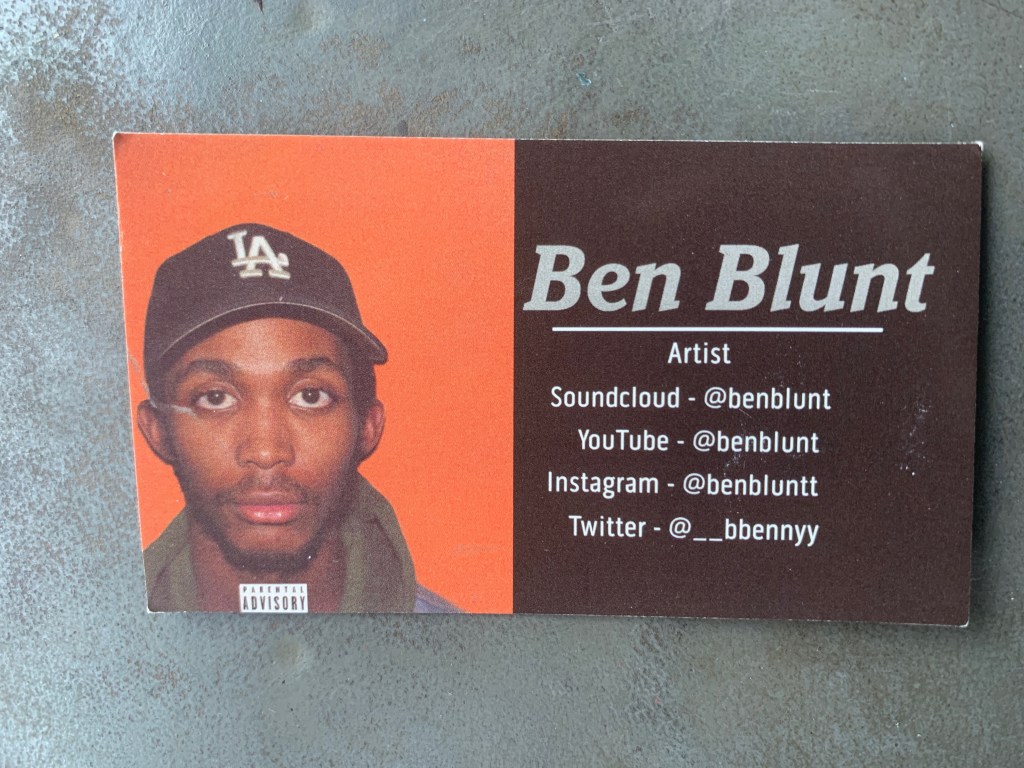
Ben Blunt

What do you want people to hear when they listen to your music?

“Basically, my pain. My struggles, the stuff I go through. Respect me. Respect what I’m saying. You don’t have to like it, just respect it.”

Just what his pain and struggles are, can be a bit hard to get out of him. Ben is very low-key. At 20 years old, Ben is still discovering his voice and style. One thing that’s remained with him has been his love for rapping. The first time he remembers expressing a desire to rap was around 5 years old at Church. The children were invited on stage and were asked “what do you want to be when you grow up?” He remembers saying “I want to be a rapper.”

“The way I rap? I don’t hear too many people out here rapping like that. I hear everyone talking about the same thing. I ain’t saying I’m gunna be the one who makes a change. I just feel like if everyone is talking about the same thing? They’re gunna get the same results.”

What is everyone talking about?

“Guns, popping pills. I’m not saying any of that is bad. I’m not talking down on them, because that’s the way they live.”

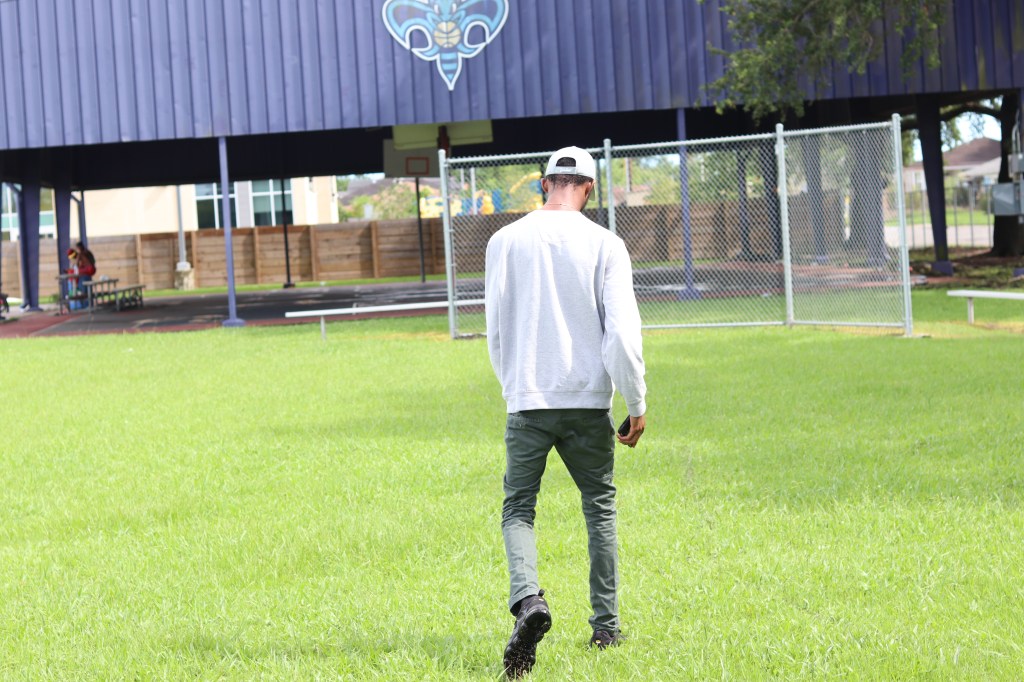
He’s a young, refreshing voice in the world of New Orleans Hip-Hop. His marketing strategy is focused on grassroots, word of mouth spread. He has business cards he keeps with him at all times, “I keep some with me, you never know. I keep them on me and pass them out to as many people as I can.” His music videos are relaxingly simple – they feature him by himself walking down the block, rapping. No cars, girls, or guns.

In his own words, his music is about “grinding, hustling, and trying to get moms out the struggle.”

Ben released his first song on Soundcloud at 15. His beat choice has remained a slower, melodic old school sound – forgoing the typical trap sounds. What’s changed in his 5 years of music is his music has become lighter and more relatable lyrically which is better suited for casual listening. The beats are crisper, there’s higher-quality production, and the subject matter is condensed. He strikes a good balance between emotional revealing and listenability. While his newer music doesn’t mention as explicitly his struggles growing up – “worry about myself fuck those other guys / wasn’t nobody around when we didn’t have no lights / no family to check if we good … no more days in my room all alone I cry” (“Where I Been” 2017), he still drops references to a troubled upbringing.

“I’m still talking about the same stuff, I just matured a little bit.” Common themes in his music include an emphasis on self-reliance, making money, and getting through the “crab-in-a-bucket type shit.” He’s young, but his music shows an impressive maturity, allowing the listener into his world and his worries – providing for his mom, getting enough money to relocate. In his own words, “don’t care too much about partying / I’d rather spit the heat” (“Let Me Vent.”) This sincerity has allowed him to begin building a fanbase. His song “Let Me Vent” has racked up a little over 8,000 streams on Spotify.

Where would you like to be five years from now?

“That’s a hard question. Financially stable. You never know how life works, that’s a hard question.” With a little more prodding, he expands on this: “I wanna be out the hood, from around here.”

“And with your music?”

“I’m trying to be on tour somewhere, or getting to it,” he laughs. “I ain’t gunna lie.”

Highlights from his catalogue include:

“Where I Been,” an emotional narrative over a minimal beat. The first part lamenting his lack of close family and friends. His second verse brings up his dreams of buying his mom a house or moving overseas. “Always wonder will it come true? / Asking myself will it come true / I just gotta believe.”

Can’t Let Up,” a good showcase of his rapping ability. “Put my soul inside these raps I hope it makes me a killing … with my raps I hope it take me across the coast.”

Ben Blunt – Dollar$$$ – Catchy hook

Follow Ben on Instagram, he’ll be releasing some more music videos soon. Follow me as well.

YBWN: Rapper, tech entrepreneur, Google Executive, soul-searcher

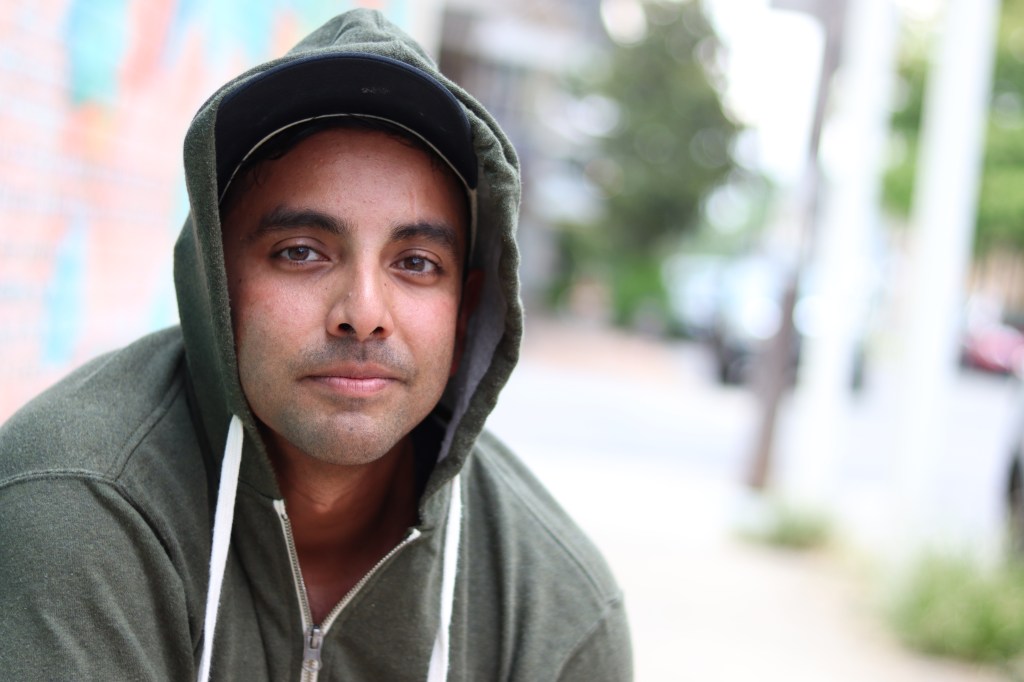
Nash and I meet on a sweltering summer day in New Orleans. I meet him at his rental in the Bywater area. He splits his time between San Francisco and New Orleans (his birthplace.) When I arrive, I’m greeted by his girlfriend. “Hey, Nash is on a call. He’ll be out in a few minutes.” 15 minutes later Nash comes out into the lounge area, and he immediately puts some beats on and starts rapping.

“Prior to 16 months ago, I’m a very different person. Some of my friends call me ‘New Nash.’ Before I rejoined Google, I had a few months off and lived the island life in Ko Pha Ngan (island in Thailand.) This is what gave me the confidence to put something out there. I can actually be a rapper. I am a rapper and I should put some shit out there.”

His first album, Game Theory, gives the listener a look into the life and struggles of a 34-year-old Google Executive who has had his fair share of victories and defeats, has lived all around the world, gone through a broken heart and career changes. What’s stuck with him throughout all this is his love for poetry and music.

Nash was born and raised in New Orleans and attended Bonnabel High School. He double majored in Economics and Middle Eastern Studies at Columbia University in New York City. Immediately after graduating in 2007, he got a job at Google and moved to San Francisco. He joins a startup called AdMob. In 2009, Admob was bought by Google for $750 Million, so Nash once again is working for Google at a more senior position. Nash was 24 when this buyout happens, what he calls a “super-lucky career event.” “It’s a good recipe to waste a lot of money. Which happens later on,” he laughs.

Once he rejoined Google, he is placed at the head of a team responsible for in-app advertising. He works a few years in Singapore, but experiences burnout. He quits Google, and from 2012-2017, Nash starts a few tech businesses and gives a TED talk. He’s always been interested in humanitarian work. One memorable assignment is his app-building for a public health project in Botswana. Explaining his work, he and his business partner went to “super remote tribal places, and really interesting health issues as a consequence. HIV rates are extremely high because of this. So we built survey apps while taking into account that a lot of places in sub-Saharan Africa don’t have cell-service. As well as a user experience for people who aren’t very tech-savvy.” This is one of the many businesses / projects he got into in the 5 year span. A few succeed, a few fail. 2017 was a bit of a breaking point: “I made impossible targets to hit which disappointed a lot of people in the business. I’m travelling all the time for work, and I get divorced in this time. I’m really just not happy. I really don’t know who I was, or where I belonged.

During this period of turbulence is when he undergoes some self-transformation. He first started debuting his writing at poetry nights in Singapore. At one of these readings, he decided out of the blue to throw a beat on and rap over it. “People were super feeling that,” he says. Before rejoining Google in 2019, he takes some time off and lives in Ko Pha Ngan. “Every sunset there’s an organic drum circle that forms. One day I realized I could rap to this. I just went off, and everyone was feeling it. I’d just rap for an hour. I did that for 40-50 nights. In December 2019, I come back to New Orleans and a friend shows me how to use ableton. I bought some beats and learned to record.” The rest is history. This all leads up to the release of his first album, Game Theory.

Ybwn covers a lot of ground sonically on his album Game Theory. The album starts with the arcade-like sound of “Tryin’ my Best” which, Nash says, is strategic. “This is my first song, on my first album. I’m just trying my best, and that’s good enough. It’s about getting better. It’s about me doing the best art I can possibly do.” It’s evident his travels across the world have influenced his style / beat choice. Tracks such as “Nuthin to a G” and “Let it pound” take influence from west coast gangsta rap. He taps into the typical hip-hop brags about money, women, and weed.

Highlights of the album, for me, are the deeply personal songs “Mantra” and “Red.” Each of these return to the familiar chant: “Looking at the yantra (Indian spiritual wheel), whats your mantra” (“Mantra”) and “Where have I been lead, who did I follow?” (“Red”)

His time living the island life on Ko Pha Ngan shines through with the beat choice for “Mantra”. It starts with a dreamy, sad guitar loop, with a seagull in the background. A xylophone comes in and out, , and he delivers moving, personal reflections on life: “the plans never written in the palm of your hand … How we bleed how we hurt / Can we see past the dirt / Can we outlast the earth / Die fast and seek rebirth / My task now is the search / I rap cause it hurts.”

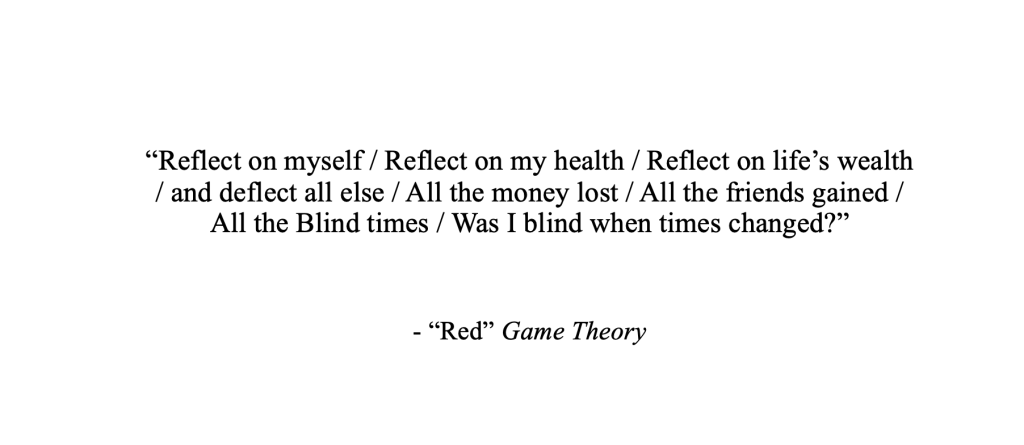
“Red” was originally a poem. “I got some weird reactions to this. I posted the poem on Facebook and a lot of people reached out to me asking ‘are you ok?’ My mom called me crying.” The chorus is a moody chant “where have I been l lead, who did I follow?” In between the chorus, he fills us in on what’s going on in his head. “Reflect on myself … All the money lost, All the friends gained, all the blind times, was I blind while times changed?” “No I cant relax, No I can’t relapse, No I cant know that, No I cant go back”

Overall, I’d say Nash is a very talented musician. His spoken-word-poetry like enunciation interacts with the beats in a way that creates a mood – nostalgia (laugh like a child), happiness, sadness, content (Tryin my best), among many more. He took time choosing his beats, and the time spent paid off.

Game Theory is available on all major streaming platforms: https://lnk.to/ybwn-gametheory Follow him on instagram to keep up with events, new music, etc.

Photos and article by Matt Valerio. Follow me on instagram and check out my other article here.

Anxiety

My own experiences? I currently feel in a fog, so I’m turning to writing. I remember always being described as a shy kid. In high school, I remember on a 3 occasions breaking down and crying because I couldn’t clearly think, and felt like an idiot. Basically, I felt (and currently feel) as though I don’t have full control over my brain.

I went to a candle store today, and struck up a conversation with two lovely women. I felt no fear, no shame. I see a friend and a lot is going on. I suddenly can’t find my words. And I’m aware that I’m a bit slower. A few reasons why it bothers me? 1) This doesn’t feel like who I am. I feel like two different people. 2) This “other person” isn’t as fun / doesn’t feel very good to be. 3) I don’t have a word for it other than anxiety. I’ve read about social anxiety and can’t relate to a lot of others experiences. I can relate much more to selective mutism which is when a person feels unable to speak.

I’m irritable and my chest tightens. I need a good book about this.

Ice Cream Fiend

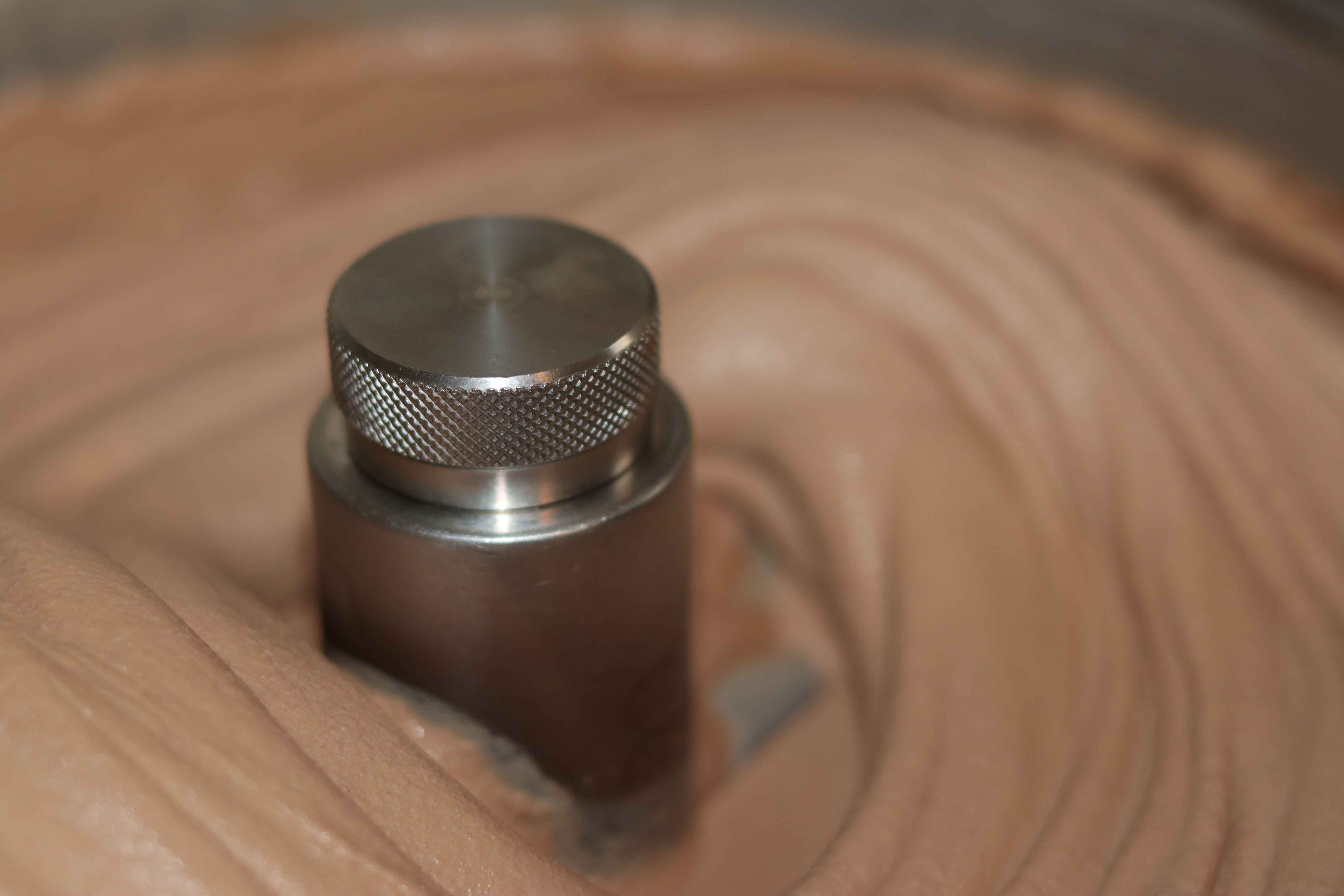
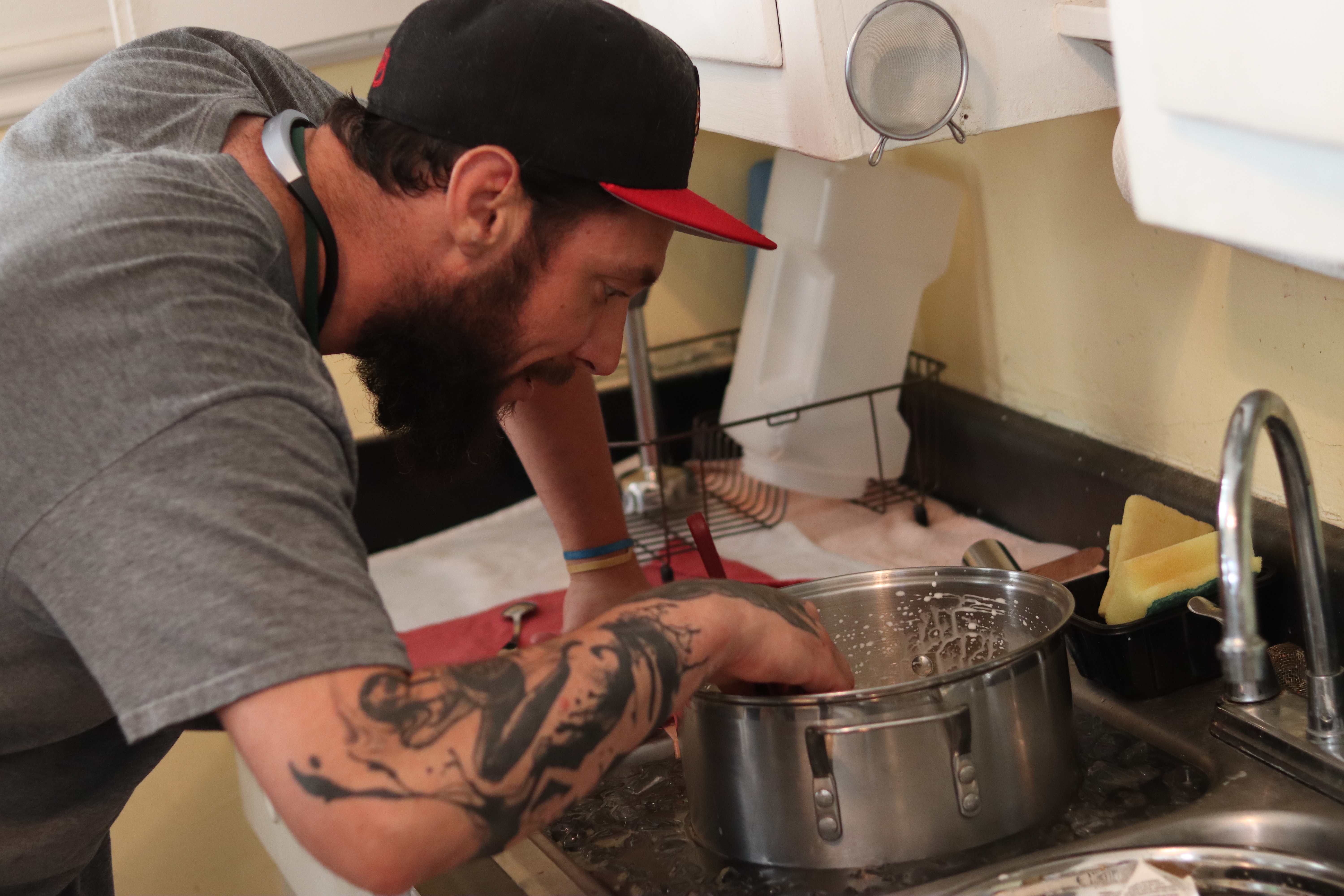
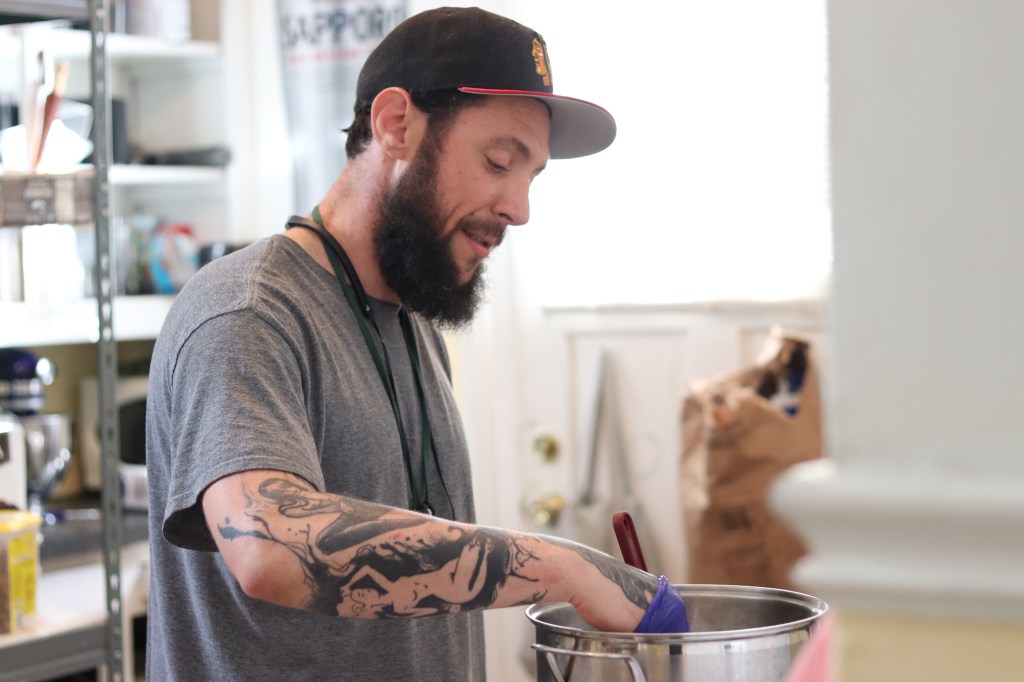
“I just wanted to be myself, you know what I mean? I just stir it … the more I stir … in circles … it just …”  his sentence drifted off as he was saying this, mesmerized by the custard base moving round and round and round in the stainless-steel pot.  He was showing me the first step to creating his own ice cream, stirring a heated mixture of milk, egg yolk, sugar and a few other ingredients.

“Look how beautiful it is,” he smiled.

I go to look over his shoulder, and see a pot of semi-thick, vanilla-colored liquid being stirred.

My own introduction into the world of Laozi Ice Cream was after I was followed by the businesses Instagram account. The profile picture is a portrait of a Chinese philosopher, with a hand edited in holding a waffle cone up to his face, made to look as if the philosopher was eating ice cream. I scroll through the profile, and it’s filled with close up pictures of plastic containers filled with various gelato flavors as well as screenshots of text messages from satisfied customers.

 “Three Words. Oh.My.God… AMAZING”

 “This.Fuckin. Ice Cream.”

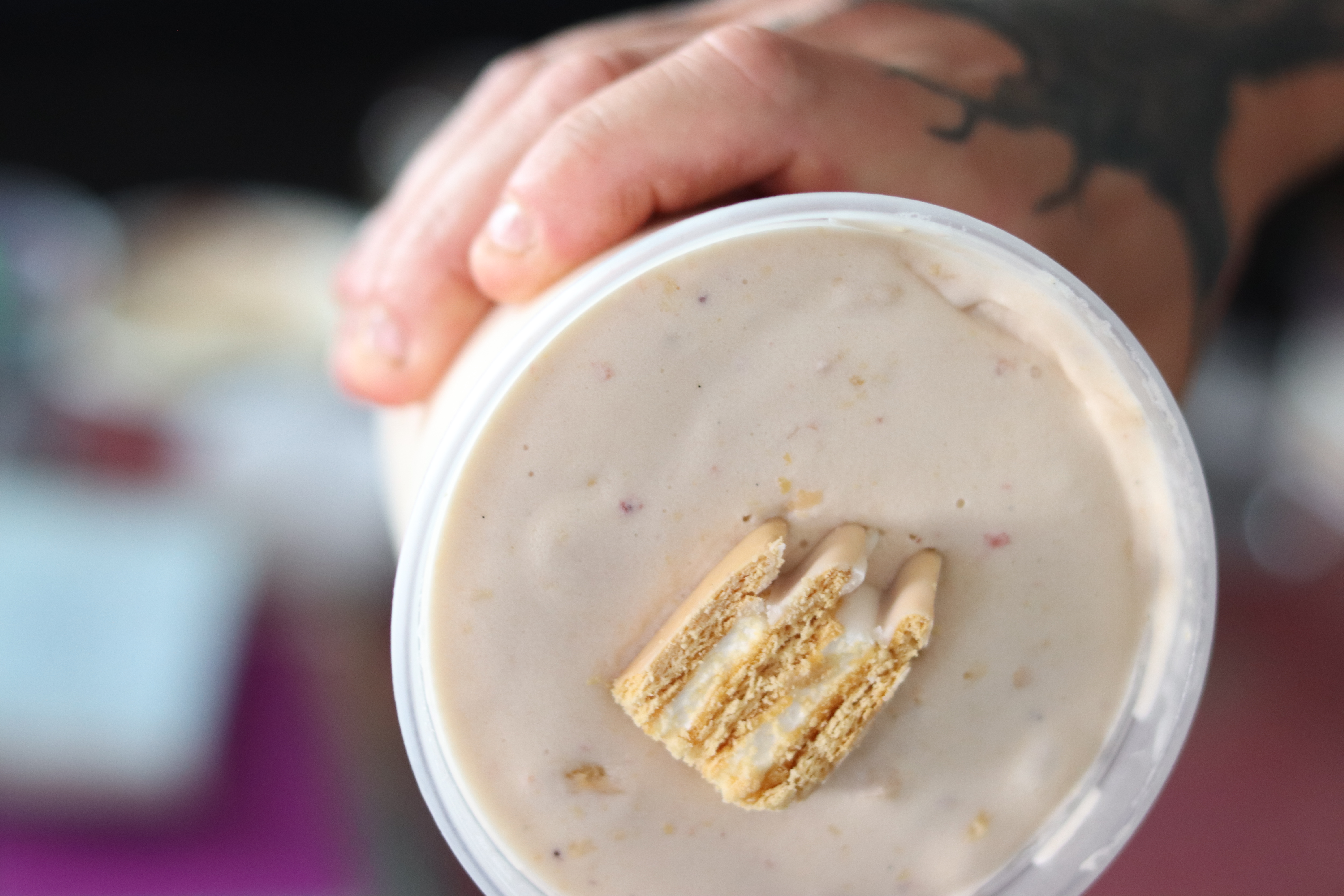
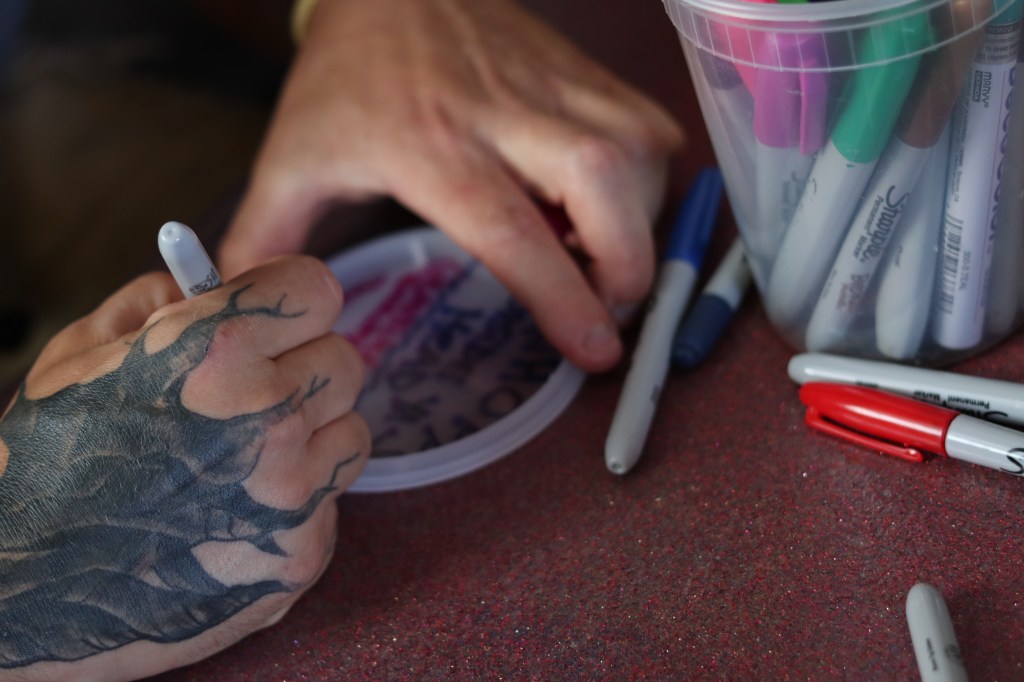
On each container top, in sprawling, unique handwriting are the flavors. You see fun titles such as “Mister Peanut done went Bananas!” “Monkeys be hatin” “Lavender Blackberry” “Strawberry Short bread” written decoratively in marker on each container. And, on the bottom of every container top is a signature “Made with good vibes!!!”

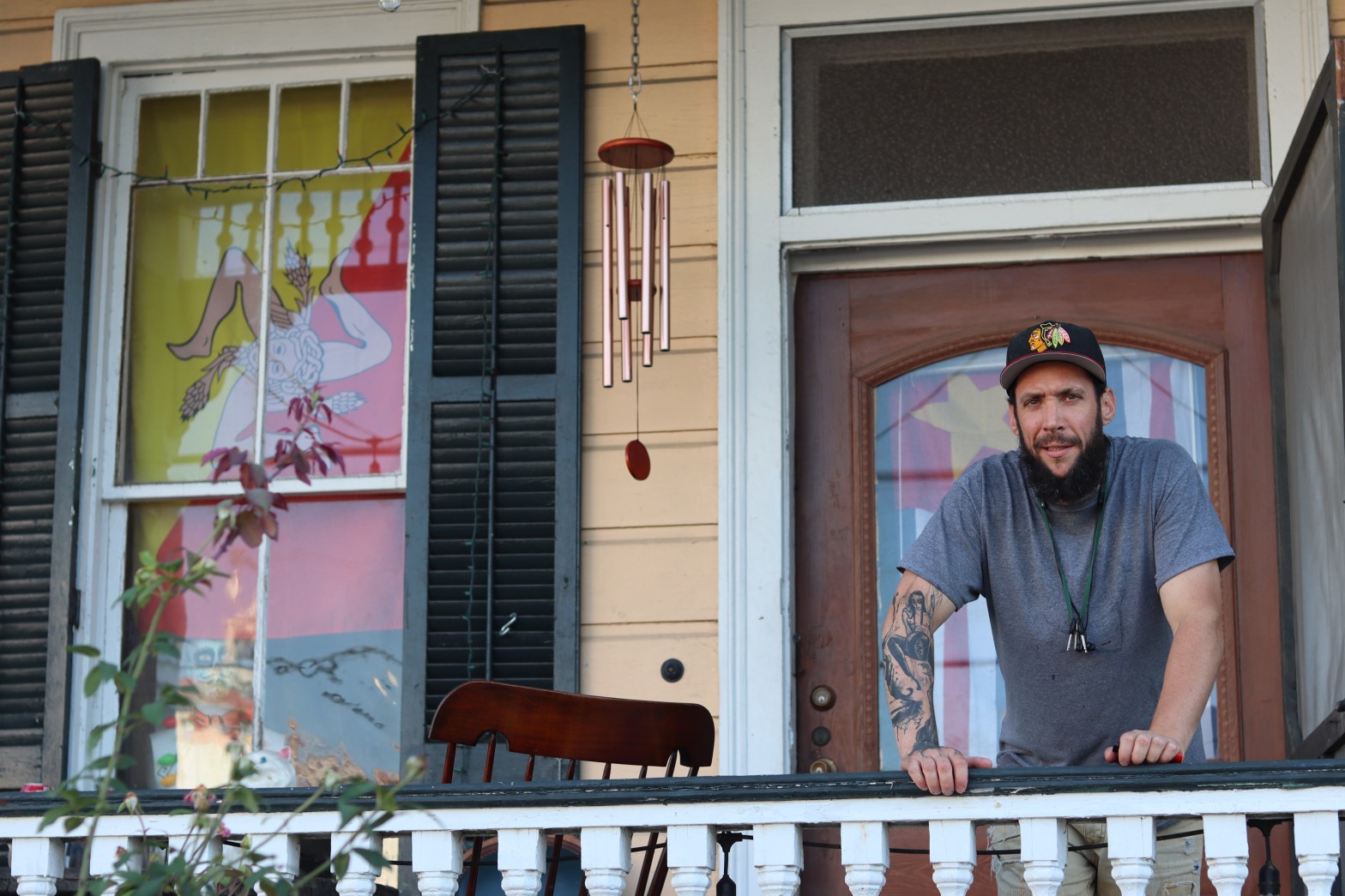
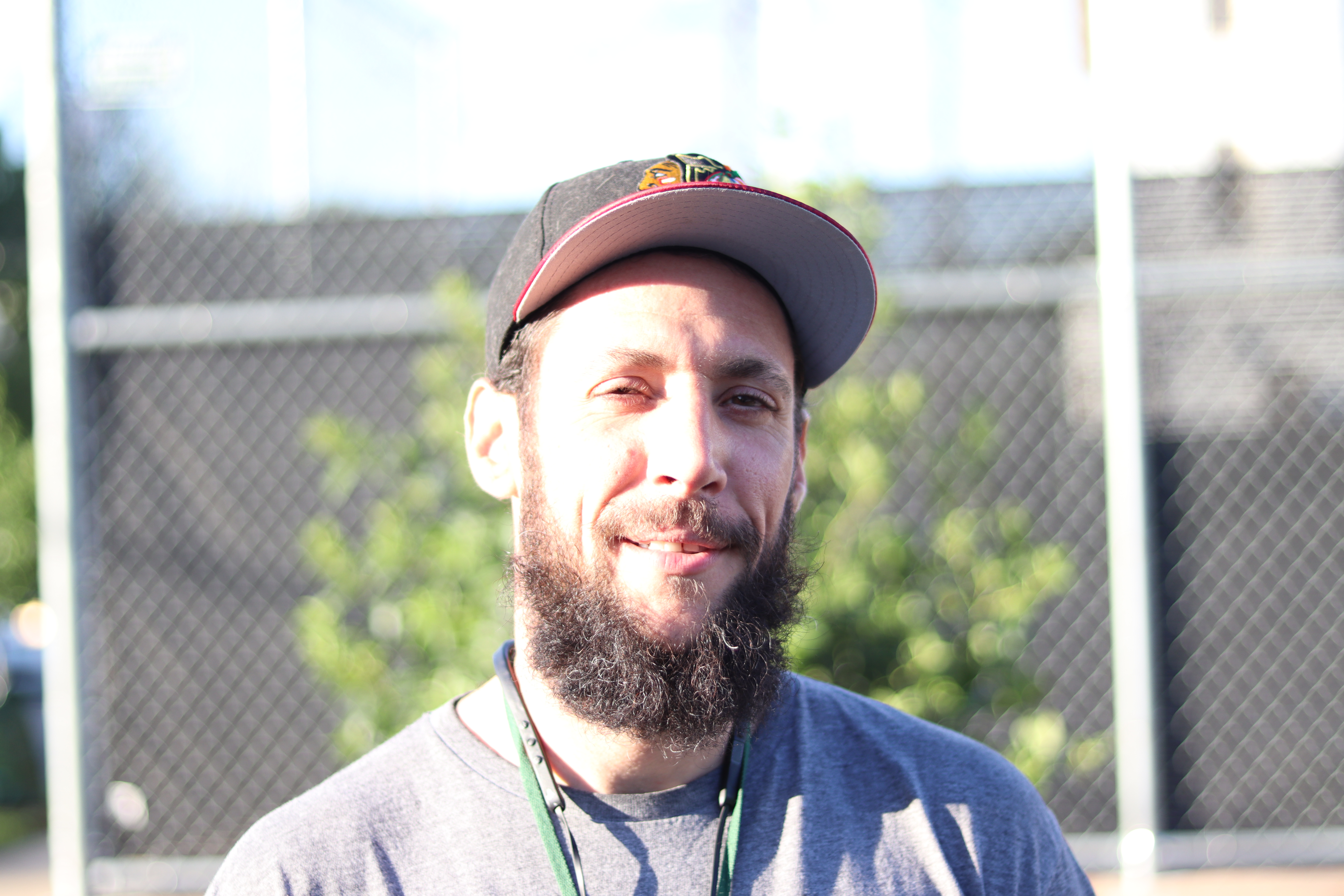
The man behind the frozen treats is Salvatore Caruso (but he goes by Sam). Sam and I were in the same Creative Writing class at Delgado. We sat near each other and bonded over our love of hip-hop. Here and there, we sent each other albums the other might enjoy. It wouldn’t surprise me if he intimidated people. He was big, bearded and didn’t talk a lot. This was offset a bit by the beanies he wore everyday. He had a limp that made it look like he dragged himself everywhere, which I later found out was from a car accident that nearly killed him.

Sam Caruso officially started his ice cream business a few months ago, but has a history of working in New Orleans restaurants, and even went to culinary school.

I spent a few hours with him to see the process and how he operates.

My first question was, “why ice cream?”

“I’ll tell you the truth about me. I used to be a heroin addict. People who do dope always crave sugar real bad. Especially going through withdrawal. I ate ice cream for years and years and years. Blue bell, I ate that everyday. I got sober, quit drinking and using. Got my shit together, started working at local restaurants, and went to culinary school.”

While working at a local restaurant, he was introduced to the world of ice cream. He says he liked to experiment, play around with flavors, and learn about the process of making ice cream. A few months after he left this job, Sam bought a small ice cream maker to begin making his own.

A few months later, Sam went to Puerto Rico for a vacation and was hit and nearly killed while riding his bike. He returned from vacation with medical bills, no job, and not many job prospects. At this point he was making and giving away small batches of ice cream to friends and neighbors. While scrolling through the internet one day he saw a quote about adversity and opportunity that really spoke to him (I asked him what it was, but he can’t remember the exact words and went to look for it a month ago, and couldn’t find it.) This inspired him to put his ice cream business idea into action. He bought a professional ice cream machine with the money from a tax return.

Talking about ice cream, he frequently uses the word “obsessed” and “fixated” to describe his fascination with how to make ice cream that can rival the stuff you buy at stores. Hearing him describe how to prevent water molecules from turning into ice crystals, french culinary terms for ice cream I’ve never heard, or how he’s in the kitchen 7 days a week, sometimes up to 14 hours a day; it’s not hard to believe.

“The other day I woke up around 4:30 am and couldn’t go back to sleep. So I went at 6am to go to Rouses to pick up what I needed. So I started around 6 in the morning, and didn’t stop until around 6 p.m.” “Don’t you get bored, or tired?” I said, as he was in the process of stirring the same pot of liquid for 30 minutes. “Nah, I listen to music. And I drink Yerba Mate.”

“What motivates you to keep doing this,” I asked him.

“I just wanna fucking cook. I used to get yelled at for doing shit my way. The chef at school would take everything I make and just throw it in the garbage, happened more than once” he laughed as he said this.

“I never thought I was capable of running a business.” But here he is, making up to $400 a day selling ice cream from his 40 square foot kitchen (not in profits, his margins are pretty slim, as doesn’t want to raise prices.)

While we were talking, the doorbell rang. It was a customer coming to see if he had any ice cream left.

“I’ll give you a deal. $5 for this quart of strawberry moon pie. There wasn’t enough sugar it in.” The man immediately agreed, and said “I’ll take two.” While one customer left, another pulled up in front of his house and asked “what do you have left?” Sam went out to her car, gave her a quart of birthday cake ice cream, and thanked her for her business.

What makes your product different?

“My custard. You cant fuck with it. I put it up against anybody. Its because of the music, my patience, my passion. It’s like a thing of beauty. I love this, don’t you see beauty in this? The consistency?”

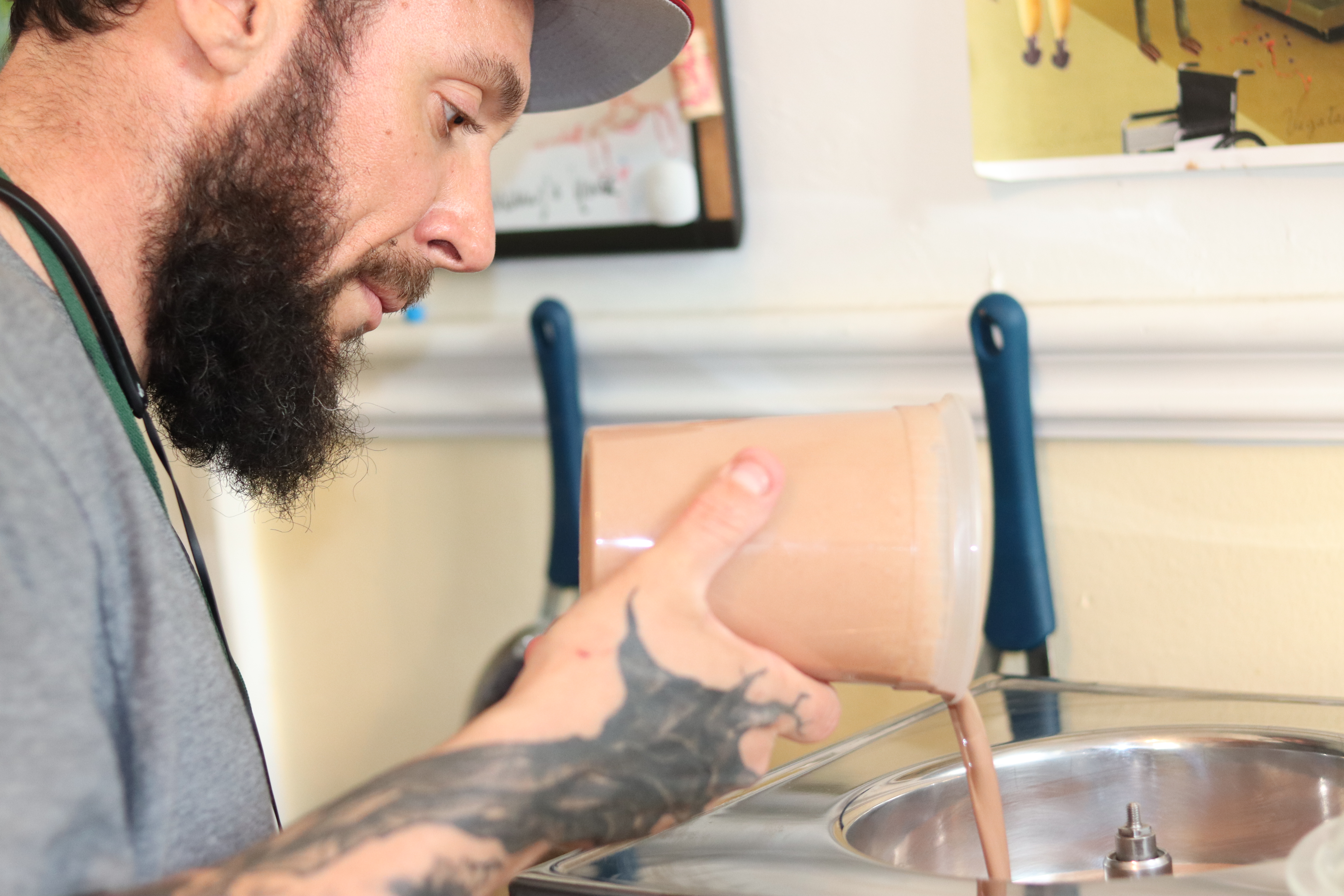
After he finishes stirring and heating the custard, we cool it off by putting the pot in his sink filled with ice and water. “It makes it happy” he says.

The final step is putting the concoction into the ice cream machine, and letting it churn for around 10-15 minutes. If you let it churn for longer, it can become too fluffy and not dense enough.

“You know there’s a law that says to label something ice cream, it must be a certain density?”

“No I didn’t.”

I looked it up when I got home. The FDA states ice cream must weigh more than 4.5lbs per gallon to be considered ice cream. Next time you go to the store to get ice cream, look at all the flavors. You’ll see some labeled “Frozen Dairy dessert” because it doesn’t meet density regulations.

After letting it churn, he offers me an entire quart to try for free. I say I just want a cup.

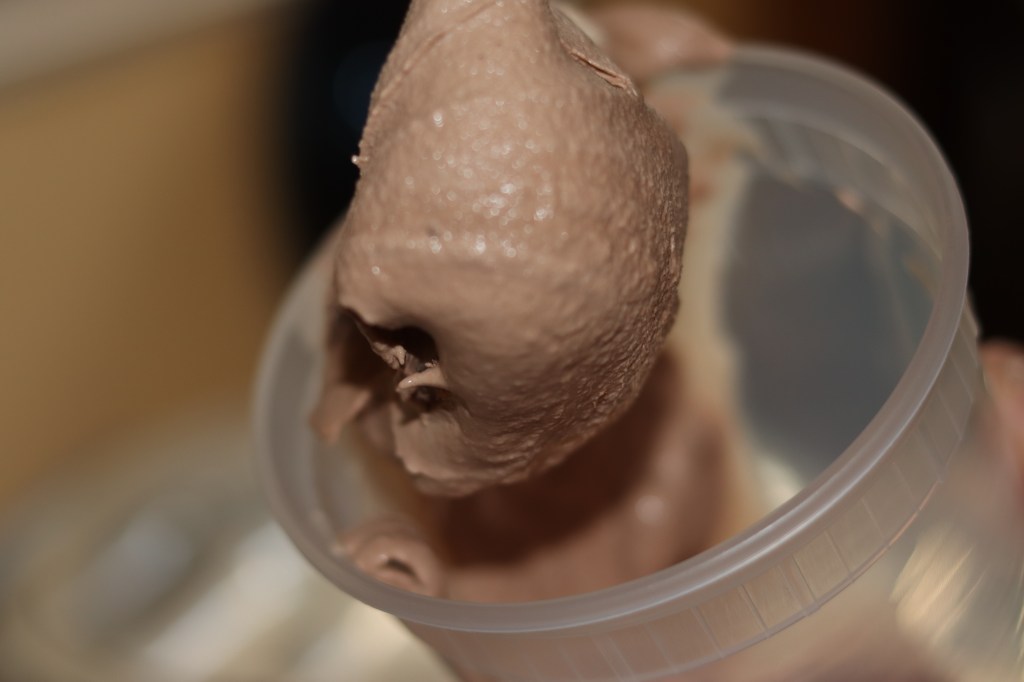
I must say, this was probably the best chocolate ice cream I’ve ever eaten. The dark chocolate gave it a rich flavor, while the custard base was responsible for the creamy, scrumptious quality.

You can follow Sam on instagram at @laozi.ice.cream. I’m Matt (article and photos) and you follow me on instagram at @thamwtan.

Design a site like this with WordPress.com
Get started